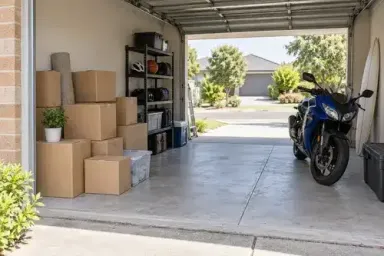
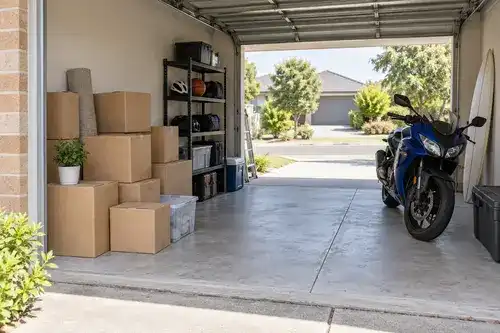
A rental garage moving plan starts with decisions about the belongings in the space. Before arranging boxes or collection times, identify what is yours, where it is going and which questions need an answer from someone else. This makes the garage part of the household move rather than a problem left for the final afternoon.
Keep personal belongings, property questions and service appointments visible in the same plan, with a clear distinction between them. Packing a toolbox does not resolve a question about installed shelving, and booking a removalist does not confirm every separate collection. Each item needs an understood next step.
An owner thinking 'I need to sell my motorcycle before moving' should give that decision its own place in the schedule. A motorcycle enquiry, a confirmed collection and a completed collection are different stages. Keep the move organised around the stage you have actually reached, rather than assuming the vehicle will be gone when ordinary boxes are ready.
Start with an ownership and destination list
Walk through the garage without trying to pack everything at once. List recognisable groups such as sports equipment, camping belongings, tools, stored furniture and vehicle accessories. Add larger individual items separately. The purpose is to see the decisions involved, not to produce a perfect catalogue of every screw.
For each group, record the owner and the intended destination. Some items will go to the new home; others may be collected by a friend or need a separate service enquiry. If ownership is uncertain, make that the next question. Being stored in your garage does not automatically make something yours to sell or discard.
Shared households benefit from agreeing these decisions before anything is packed. One person's spare equipment may look like unwanted clutter to another. Ask the owner to identify what they intend to keep and what they authorise others to organise. A clear answer prevents the moving plan from being based on guesses.
A simple list can use these headings:
- Item or recognisable group.
- Owner or person who needs to decide.
- Intended destination or unresolved question.
- Next action and person responsible.
- Appointment or completion status, where applicable.
Keep property questions outside the packing pile
Some things in a garage raise questions about the property rather than about the household's packing. Installed shelving, fitted storage, controls or equipment listed in property records may need clarification. Do not remove, dismantle or dispose of them because they happen to be next to your belongings.
Identify the item and ask the property manager to clarify the arrangement for the particular property. Where relevant, refer to the records you already have. A photograph and a precise description are more useful than an enquiry about 'the stuff in the garage'. Keep the response with the moving plan so everyone follows the same information.
This is also a reason to keep property records separate from packing labels. A box label tells a mover where a household item is going. It does not establish ownership of an installed item or answer a tenancy question. Those matters need their own appropriate confirmation.
Our article on using technology for home management offers background on organising property information. Choose a simple method that lets the relevant people see current decisions without sharing unnecessary personal documents or unrelated household details.
Give large items their own appointment
A stored motorcycle, a substantial machine or an unusually bulky item may need an arrangement separate from ordinary household packing. Describe the item and its present location to the proposed provider. Ask whether it is within the service offered and what information is needed before an appointment can be confirmed.
Include access details that could affect the enquiry: a narrow entrance, a sloping driveway or other belongings near the item. Report the situation as it exists. Do not promise access that depends on moving something you cannot safely handle or on an appointment that has not been confirmed.
Record which belongings accompany the collection. For a motorcycle, loose accessories or personal riding equipment should not disappear into the general moving pile through assumption. Agree what is included in the relevant arrangement and keep unrelated household items identifiable.
Avoid attempting unfamiliar loading, dismantling or mechanical work to make a booking fit. Ask the provider what preparation is appropriate for the item and your circumstances. The planning task is to communicate clearly and arrange suitable help, not to improvise a transport method.
Sort ordinary belongings before arranging the pack
Once ownership and destinations are understood, group ordinary belongings by where they are going. Keep items awaiting a decision distinguishable from those ready for the household move. This gives the packing enquiry a clearer scope and reduces the chance that an unresolved item is treated as ready to transport.
The North Lakes garage and shed moving guide is useful background on why this space deserves early attention. For your own move, confirm the proposed contents directly with the removalist rather than treating a general guide as that provider's acceptance of every item.
Use descriptions that will make sense at the destination. Several cartons marked only 'garage' give little indication of which contains camping gear or a particular set of household tools. Keep associated ordinary parts and records identifiable, while following appropriate packing advice for the actual contents.
Do not let a label substitute for a conversation about an unusual item. If you are unsure how something should be prepared or whether it can travel with the household load, ask before packing it. The provider needs to know what it is, not simply the room it came from.
Leave specialist questions with the right provider
A garage can contain items that fall outside ordinary packing advice. Unknown containers, fuel-powered equipment and materials needing special handling should prompt an appropriate enquiry. Do not put them into an unlabelled household carton and hope the issue disappears with the moving truck.
Explain what you have to the relevant provider and ask what guidance applies. For disposal questions, check the appropriate local service directly. For equipment preparation, use the manufacturer's instructions and competent assistance where needed. This article does not provide chemical handling, fuel draining or machinery transport procedures.
Keep unresolved specialist items visible in the plan as questions to resolve, without moving them around simply to create a neat photograph. If an item appears damaged or unsafe, seek appropriate advice before handling it. A moving deadline does not make an unfamiliar task suitable to attempt yourself.
The American Self Storage garage planning article provides another general sorting perspective. Its location-specific rules do not establish what applies to an Australian move. Use your actual provider and local services to confirm arrangements for the particular items involved.
Coordinate clearance and property tasks
As belongings leave, the space available for cleaning or assessment may change. Arrange those tasks around confirmed access and the relevant property's requirements. A cleaning appointment booked on the assumption of an empty garage can become difficult if a separate collection has been delayed.
Keep observations about the property factual. Describe a mark, an issue noticed during the move or an access problem without deciding its cause or responsibility. Raise the question through the appropriate property-management process. Do not undertake unfamiliar repairs or make changes to fitted items merely to finish a moving checklist.
Our guide to building a preventive maintenance plan provides broader context for keeping property tasks organised. During a move, a smaller list of current observations and agreed actions may be all that is needed to maintain clear communication.
This moving plan does not determine inspection outcomes, cleaning obligations or a bond result. Its practical value is that it identifies the belongings, appointments and questions that still need attention. Property-specific requirements should be clarified through the relevant records and appropriate advice.
Share the current version of the plan
Choose one place for current appointment details and decisions. A paper list, a shared note or a simple spreadsheet can work. The useful feature is that people can tell which version is current and which actions remain open.
When a provider changes an appointment, update the status and tell anyone whose task depends on it. Distinguish 'requested', 'confirmed' and 'completed' in plain language. A preferred collection time written beside an item should not look identical to a confirmed arrangement.
Share only what the other person needs. A removalist may need an item description and access information, while a household member needs to know which belongings are ready. Keep private records, payment details and unrelated contact information out of a broadly shared task list.
A fictional garage move with separate collections
Consider a household moving from a rental with camping equipment, household tools and an unused motorcycle in the garage. They confirm the owners of the belongings, ask about one fitted storage item and make a separate motorcycle collection enquiry. Ordinary household packing can now be planned without treating every object as part of the same load.
The proposed motorcycle appointment changes. Because it was recorded separately, the household can revise the access and cleaning schedule instead of expecting the general mover to resolve it. They confirm the new arrangement and tell the people affected. The fitted storage question remains with the property manager until clarified.
This is an illustrative planning example, not a customer account or a promise about how a provider will respond. It shows the benefit of keeping ownership, collection status and property questions explicit. No single service appointment is asked to stand in for all three.
Walk through the space against the list
Near the end of the move, compare the garage with the current plan. Identify anything still present and the decision recorded for it. An item waiting for collection should have a current arrangement, while an ownership question should have an identified person responsible for resolving it.
Check the ordinary storage areas that are easy to overlook, without entering unsafe areas or interfering with installed equipment. Review the records and current property-manager instructions for the next steps. Avoid assuming that a small forgotten item can simply be left for someone else.
For owners coordinating a later sale, preparing a rental property for sale is a separate planning topic. Keep the moving household's belongings and current arrangements clear before combining them with a wider property presentation schedule.
Finish with clear decisions and confirmed arrangements
A useful rental garage moving plan gives each belonging a destination, each appointment an accurate status and each property question a clear next step. It makes the garage manageable through communication and sequencing, rather than through a rushed attempt to pack everything together.
Start with what is actually in the space, confirm what remains uncertain and update the plan as arrangements change. That leaves the move easier to follow for the household, the relevant providers and the people managing the property.